Why Your Cockapoo puppy Is a Gundog (And Why That Matters More Than You Think
Why Your Cockapoo Puppy Picks Everything Up - It’s Not Random.
Why Your Cockapoo Is a Gundog (And Why That Matters More Than You Think)
If you’ve got a cockapoo, you’ve probably said something like this at some point:
“He just picks everything up.”
“She steals socks, shoes… anything she can find.”
“He won’t listen outside — he’s just too distracted.”
And at some point, someone may have told you:
“that’s just cockapoos”
But here’s the part most people don’t realise…
Your cockapoo is a gundog.
Yes, really… your cockapoo is a gundog
Cockapoos are a cross between:
· Poodle
Both of which are gundog breeds.
Poodles were historically used as retrievers, particularly for waterfowl such as ducks and geese. Toy and miniature poodles have been bred for size, not to remove those working traits, so a lot of that genetic wiring is still very much there.
Cocker Spaniels are what’s known as hunting retrievers. And even if the cocker part of your cockapoo is a show cocker… quite a few of them didn’t get the memo that they’re not supposed to be working.
They were bred to:
- work with people
- use their nose
- pick things up and carry them
So when your puppy is:
- grabbing everything they can
- running off with your belongings
- completely distracted outside
That’s not random.
That’s not them being “naughty”.
That’s instinct.
What that actually looks like in real life
Living with a gundog puppy often means:
- they notice everything
- they’re constantly drawn to scent
- they pick things up… a lot
- they struggle to switch off
And if you’ve done puppy classes already, you might have noticed:
things work indoors
and then fall apart outside
That’s usually the missing piece.
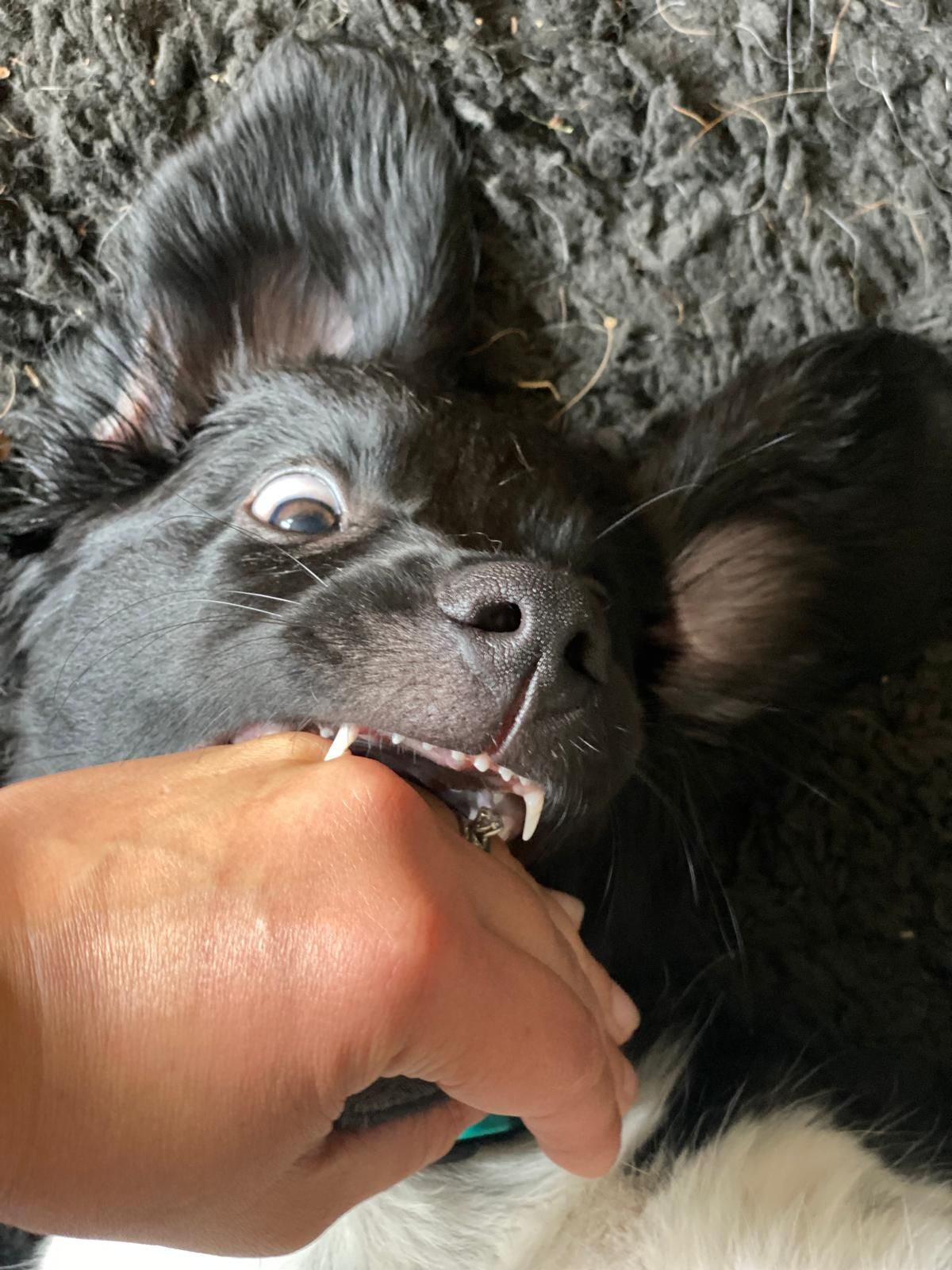
Why your puppy keeps picking things up
Let’s focus on one of the most common frustrations:
picking things up (and not giving them back)
With gundogs and their crosses, this is hardwired.
It’s in their DNA to:
- find things
- carry them
You’re not going to stop that.
And actually… you don’t want to.
What you can influence is:
what they pick up
and what they do with it
Where things often go wrong
When puppies start grabbing things, most people try to:
- take it off them
- tell them “no”
- stop the behaviour altogether
But that usually backfires.
Because now:
the item becomes more valuable
and you become someone to avoid
That’s how you end up with:
- stealing
- running off
- guarding
- or swallowing things quickly
What to do instead
Instead of stopping the behaviour, shape it.
Give your puppy better options.
- Have toys available and rotate them so they stay interesting
- Use a variety of textures (soft, rubber, tug, retrieve toys)
- Notice when your puppy chooses a toy and engage with them
That moment matters more than people realise.
Because the more rewarding that is, the more likely they are to choose toys over your belongings.
A quick note on stones (because this comes up a lot)
Stones are usually where people draw the line.
And rightly so — it’s not safe for puppies to be picking them up.
But this is also where things often get a bit tricky.
Because the more we try to:
- take stones out of their mouth
- swap them for treats
- react quickly every time
the more value we accidentally give them
Now the stone isn’t just a stone.
It’s something that:
- gets your attention
- turns into a game
- or earns a reward
So what actually helps?
Instead of constantly managing stones, focus on what you do want in your puppy’s mouth.
- build a strong habit of picking up toys
- make those toys genuinely interesting (rotate them, use different textures)
- engage with your puppy when they choose them
Because if your puppy is carrying something appropriate, there’s far less space and interest for picking up stones.
The bigger picture
You’re not just trying to stop one behaviour.
You’re shaping a pattern:
pick things up and bring them to me
When that’s clear, consistent and rewarding, a lot of the “problem” behaviours start to fade out on their own.
The habit you want to build early
From a very young age, encourage your puppy to:
bring things to you
Not run away with them.
Not hide them.
Not swallow them.
Just bring them to you.
And when they do, praise them and reward it.
Every time.
Why this matters later
If this isn’t shaped early, that same instinct can turn into:
- stealing and guarding
- chasing and grabbing
- swallowing things quickly
None of which are behaviours you want to be fixing later on.
Real life (because this isn’t theory)
This doesn’t mean your dog will only ever bring you appropriate things.
I’ve had:
- crocs dropped into the bath while I was in it
- lumps of wood brought upstairs from the wood burner
That’s part of living with a gundog.
But I would always rather have a dog who brings me their treasures than one who runs off, hides them, or swallows them.
So why does this matter for training?
Because once you understand this, a lot of things start to make sense.
Your cockapoo isn’t:
- stubborn
- ignoring you
- trying to be difficult
They’re simply doing what they were bred to do.
And most puppy training doesn’t take that into account.
Why generic puppy classes don’t always work
Many puppy classes focus on:
- sit
- down
- recall in a quiet space
Which is fine as a starting point.
But it doesn’t prepare your puppy for:
- real environments
- scent and distraction
- making decisions outside
That’s why things can feel like they “fall apart” once you leave the class.
Where to go from here
This is something we cover in our puppy classes — helping puppies learn how to stay connected to you in the real world, not just in a training space.
If you’re reading this thinking “that’s exactly my puppy”… you’re not alone.
You’re very welcome to join a class, or book a 1-2-1 puppy visit if you’d prefer something more tailored to your dog.
To book your spot in puppy classes - clicke here.
To book a 1-2-1 puppy visit - click here.